
Painting Eyes
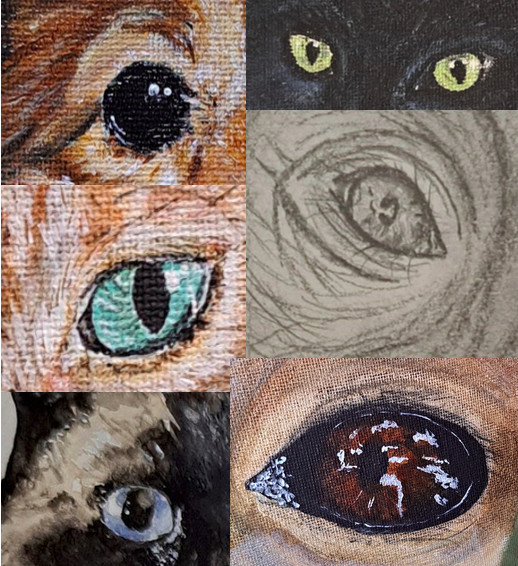
In this post I talk about the significance of eyes in paintings throughout history and talk about my own practice of how I create eyes in my animal portraits.
Siobhan Guthrie
6/16/20263 min read
Eyes are notoriously difficult to imitate. From two dots inside a circle for your average smiley face to the extraordinary portraits of Nigerian hyper-realistic artist Arinze Stanley Egbengwu: the polarity could not be more opposite! I fear that my own attempts at eyes, certainly human ones, are more at the scale end of the smiley face. Nonetheless I believe I am drawn to eyes in this blog post for their historical significance in art, the challenge of being able to draw and paint them myself and I hope to share with you some simple tips to make your paintings of eyes look more realistic.
Historically eyes have been painted by humans since the earliest civilisations. Often described as the windows to the soul, eyes carry significant symbolic meaning. From the Eye of Horus in Ancient Egyptian hieroglyphs, representing healing and protection to Renaissance paintings of people like Leonardo Da Vinci’s Mona Lisa whose eyes follow you round the room. Eyes are everywhere! One of my favourite paintings is of Queen Elizabeth 1st. The Rainbow Portrait depicts the monarch in royal finery. Understated yet majestic, Queen Elizabeth is shown as an all powerful ruler with eyes and ears sewn into her dress. She can hear and see all and her spies are listening and watching everybody! Here eyes have a political significance. Google these historical paintings. What do you see? How do they make you feel or think about eyes?
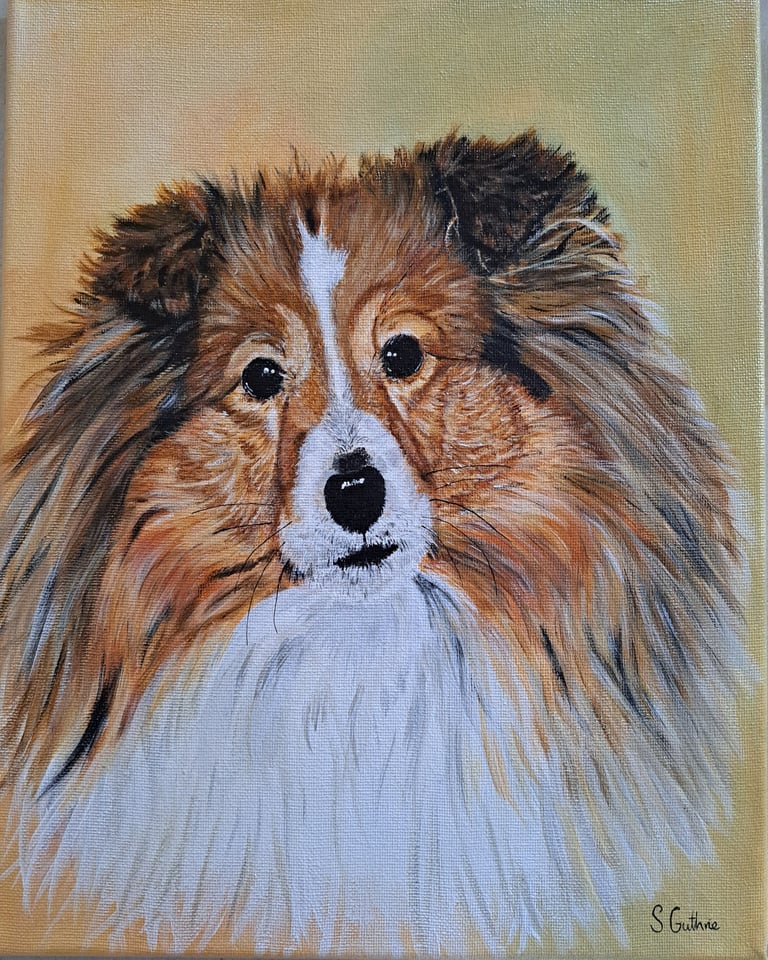
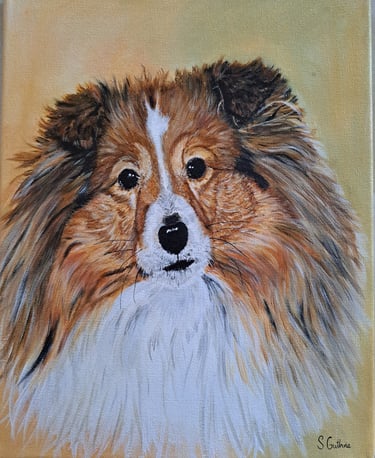
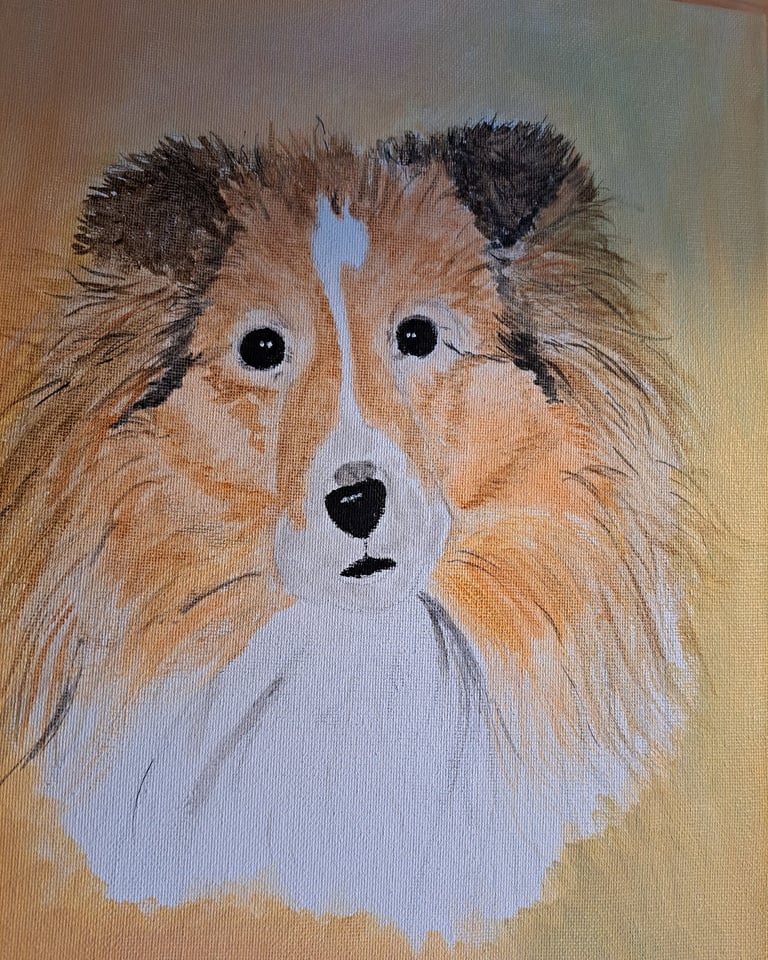
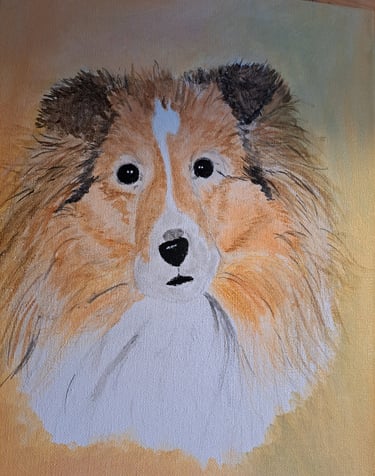
Painting animal portraits undeniably means painting eyes. The eyes bring life and character to the subject. Below shows two stages of one of my pet portraits. This is how eyes can look before painting in the details. As you can see, they are flat and lifeless on the canvas in the first image. Adding a highlight of white acrylic paint to express how the light shines on the subject adds depth and character to a beloved pet. My advice is to look very carefully at your reference photo. Notice how I have altered the highlights in the left eye.
How can you imitate the fall of the light on the body of the animal as well as within the eyes? I really looked at all the colours in the fur and tried to illuminate the light shining on the dog's fur as well as in the eyes. The highlights are always the last layer for the eyes but I do in fact paint the eyes first. This might seem contrary to how our eyes see our facial features, but in fact the eyes sit deepest in the skull and are therefore more aligned with the background. I highly recommend you focus on getting the eyes proportionate and correct before adding colour to the rest of the face.
Just as it is important to add highlights to the eyes, it is also crucial to look at imitating shadows. On the dog's head I have focused on building the shadows where the fur is thickest especially around the ears and side of the head. Creating this contrast by building layers of darker fur has added depth. This makes the white highlights stand out all the more. Looking back I cannot believe the difference between my basic layers of paint and the final commission! But it goes to show that all the important foundation layers are purposeful and every brush stroke counts.
Keep practicing those eyes: it will aid your structural drawing techniques for your future animal paintings.
Contact
If you have any questions about my creative processes or wish to commission a work please contact me. If you would like to commission a pet portrait, please write your pet's name/s in the subject line of the email along with a photograph for me to work from.
© 2026. All rights reserved